the thing about law as promised:
I learned recently that the book of John is the most Jewish of the gospels, pretty cool. Just because it was written in greek (actually aramaic which is a slang form of Hebrew) doesn't make what YHWH told the Israelites obsolete...
that's like saying the consitution gives us freedom to do whatever we want...yes but it's the freedom to do what's right....do not violate someone elses freedom or break the constitution because then it's no longer your "freedom" ... same thing with the ten commandments....no we can't keep them apart from Yeshua and we needed them to show us we were sinners, because I know many people who tell me they are good people or at least not as bad as so and so, but sin is sin and the commandments show us this and Yeshua even furthered that it's not just the act of sinning but even the thought of sinning that makes us sinners ... but through HIS mercy/lovingkindness we don't get something we do deserve which is death because Romans 6:23 tells us the wages of sin is death...and by Yeshua's grace/favor we do get something we don't deserve - the gift of God is eternal life through Jesus Christ our Lord as the rest of Romans 6:23 tells us. We have HIS grace and HE didn't break even one commandment and not just the 10 but also the whole 613 that are in the first 5 books of the Bible. Of course we don't do the sacrificial laws anymore since Yeshua was our once for all sacrifice.
HUMOR
A young boy says to a priest, "is it true that man is made of dirt?"
the priest replies, "Yes we are made from the dust of the earth."
so the boy then says," can you come to my house? there is a lot of dust under the bed and I'm not sure if it's someone coming or going."
another one:
God went to pharoah and said "I have a commandment for you." Pharoah says "what's the commandment?" God replies, "thou shalt not commit adultery." Pharoah says, "we don't want that commandment."
So God goes to assyria and says the assyrian king, "I have a commandment for you." the assyrian king asks, "what's the commandment?" God replies, "thou shalt not commit adultery." the assyrian king says, "we don't want that commandment."
Then God goes to Moses and tells him HE has a commandment for him. Moses asks, "well how much does it cost?" God tells him it is free so Moses says, "I'll take ten."
Sukkot
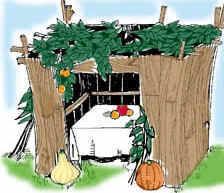
What I learned tonight in Hebrew Insights from the Gospels regarding Sukkot:
When Yeshua entered Jersulem and the people laid down palm branches and said Hosanna! (the KING has come to save us) they knew in Zechariah chapter 14 it talked of Sukkot as being the time when HE would come and they thought maybe it could happen at another time other than the 7th month, since this was just before Pesach.
I find that very interesting. Mark 11:23 - For verily I say unto you, That whosoever shall say unto this mountain, Be thou removed, and be thou cast into the sea; and shall not doubt in his heart, but shall believe that those things which he saith shall come to pass; he shall have whatsoever he saith.
Yeshua was talking of when HE would split the mount of olives and this mount is to the east of mount moriah. HE's saying do what you're to do to hasten HIS coming.
the below I received via email from First Fruits of Zion and you can sign up to get weekly Torah portions to read with commentary as well HERE
Torah : Leviticus 22:26–23:44
Haftarah : Zechariah 14
Gospel : Luke 2
The Apostle John uses a verb form of the same Greek word that is used to translate the Hebrew word for “booth” (sukkah) when he wrote, “And the Word became flesh, and dwelt [tabernacled] among us.” (John 1:14) He tabernacled among us, and He will tabernacle among us again in the messianic future. The celebration of the Festival of Booths (Sukkot) celebrates the Messiah who once tabernacled among us, now tabernacles within us, and in the future will again tabernacle among us.
The last appointment on God’s Leviticus 23 calendar is the Feast of Booths, a seven-day harvest celebration. The Hebrew name of the festival is Sukkot, a word that means “shelters, stables or huts.” These temporary, tent-like structures are often translated as “tabernacles” in our English Bibles. The festival is so named because Israel is commanded to annually build such dwelling places as a reminder of the post-exodus years when they lived in huts and booths, following God in the wilderness.1 Sukkot is a time of joy and celebration, a time to celebrate the harvest and revel in God’s goodness.
Many beautiful traditions are attached to the annual Festival of Booths. For example, it is traditional to invite guests into one’s booth for a festive meal each night of Sukkot. Among the list of invitees are some auspicious names: Abraham, Isaac, Jacob, Joseph, Moses, Aaron and David. Each are specially invited to come into the booth and pull up a chair at the table. Obviously, Abraham, Isaac, Jacob, Joseph, Moses, Aaron and David are unlikely to actually attend the meal, since they are all dead. That, however, is the point of the ritual. The Feast of Booths anticipates the Messianic Age, when the dead will be raised to life again and we will all sit at the table with the aforementioned in the kingdom of heaven.
When Messiah comes, He will bring in the final harvest of God’s kingdom and institute an age of peace and prosperity upon the earth. The prophets relate that day to the festival of Sukkot, a day when every man will sit beneath his own vine and fig tree.2 Isaiah 4:6 tells us that God will spread a tabernacle of glory over Jerusalem.
According to the prophets, the Feast of Booths celebrates a time when all nations will ascend to Jerusalem bearing tribute to King Messiah and celebrating the festival. In that day, all nations will ascend to His throne in Jerusalem in order to celebrate the Festival of Booths (Tabernacles). Obviously, this is a very important festival for disciples of Messiah today.
Sukkot is the great festival, the culmination of all the appointed times. Sukkot is to the other festivals what the Sabbath is to the other six days of the week. As such it is a fitting foreshadowing of that great celebration of creation when the entire world will live in peace and brotherhood under the reign and rule of the righteous Messiah King. Just as the weekly Sabbath foreshadows the millennium, Sukkot also looks forward to that great age. Therefore, the festival of Sukkot, like all the festivals, foreshadows Messiah.
also FFOZ has a weblog and here's the latest entry
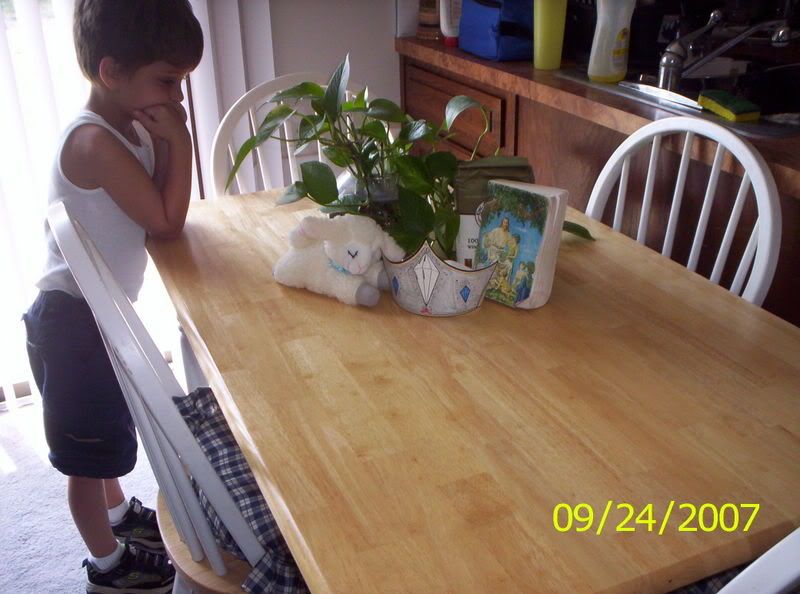
PS IF YOU WANT TO SAY HAPPY BIRTHDAY TO JESUS NOW IS THE SEASON!!!
 )
)
Recent Comments